Togo Advance 1000 LFP Reviews: See Why 0 Shoppers Rated It 0 Stars!
Still undecided on the Togo Advance 1000 LFP? Our community of 0 reviewers has thoughts — and it’s not all sunshine and five stars.
 Supermod
 Moderator
 Recaptor
Togo Advance 1000 LFP: A Robust Portable Power Station for Diverse Needs
In the fast-evolving realm of portable power stations, the Togo Advance 1000 LFP stakes its claim as a versatile, high-capacity option designed for both emergency backup and outdoor enthusiasts. Built with a Lithium Iron Phosphate battery, this power station promises a solid blend of safety, durability, and performance. Its specifications suggest it's engineered to meet a broad spectrum of applications, balancing power output with portability for users who demand reliability on the go. But does it really live up to its numbers in real-world conditions? Let's take a detailed dive into what this model offers and for whom it's best suited.
Detailed Specs & Features
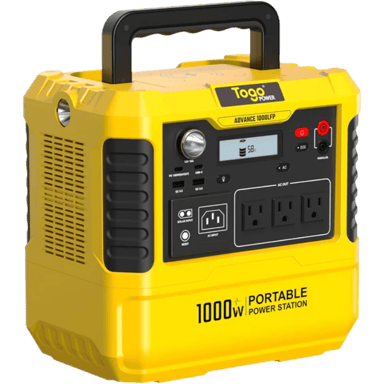
On paper, the battery capacity of 1000Wh paired with a rated power output of 1000W makes this unit sufficiently powerful for running various home appliances and power tools. The surge capability spikes to 2000W, accommodating brief energy bursts needed for startup devices. It includes an impressive array of output ports: three AC outlets, two USB-A, and two USB-C ports, with the USB-C ports supporting up to 100W power delivery, which is crucial for fast and efficient charging of modern electronics. The inclusion of a pure sine wave inverter further ensures sensitive devices receive stable and clean power, safeguarding important medical devices or CPAP machines from voltage fluctuations. Physically, the device measures 7.91 inches in width, 11.42 inches in depth, and 10.71 inches in height, and weighs 26.5 pounds. This combination indicates a reasonably compact yet substantial design that balances capacity against portability. The foldable handle enhances transport convenience, an important factor for those taking it camping or moving it around during power outages. Charging versatility is highlighted with multiple inputs, including an 800W AC input, 200W solar input, and a 100W car input. These options provide users with flexibility, whether on-grid or off-grid, with an internal MPPT controller that optimizes solar charging efficiency. According to specs, it requires about 90 minutes to fully charge via AC, which is competitive within this category. At the same time, solar and car charging take considerably longer, at 8 hours and 16 hours, respectively. Pass-through charging capability allows charging devices while simultaneously recharging the power station, an often sought-after but less common feature. The battery itself, based on the robust Lithium Iron Phosphate (LFP) chemistry, is rated for 5000 charge cycles, which far exceeds many traditional lithium-ion alternatives in longevity and safety. Built-in battery management systems and multiple protections, such as overcharge, over-discharge, overcurrent, short circuit, and temperature, provide comprehensive safeguards essential for trustworthy operation. Certified with UL, CE, and FCC marks, it aligns with stringent safety and environmental standards, reinforcing its reliability in professional and personal contexts.
User Experience & Performance (Based on Specs)
Design & Build
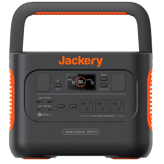
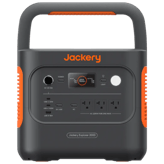
From its box-shaped form factor to its textured yellow plastic finish, the Advance 1000 LFP casts a practical, durable image rather than a flashy one. It lacks wheels and telescopic handles, which might limit ease of movement over longer distances, but the foldable carry handle provides decent portability. The LCD with indicator lights offers clear real-time feedback on the battery and output statuses, which is crucial for managing power consumption when off-grid. However, the absence of integrated cable storage could lead to minor inconveniences during transport or storage.
Performance
What makes this model notable is its resilient LFP battery chemistry, which suggests durable, consistent long-term performance. The pure sine wave inverter promises clean power essential for sensitive electronics, all while delivering up to 1000W continuous power, suitable for many mid-power appliances like mini fridges, laptops, and power tools. The surge output of 2000W handles startup loads well, an important specification for tools and appliances that require a brief power spike. Charging options are robust but somewhat moderate in speed; the 90-minute AC charge time is a strong point, but solar and car recharging take much longer, which should be considered for prolonged off-grid use. Additionally, the lack of Wi-Fi or app connectivity indicates no remote monitoring or control, limiting smart functionality that some competitors now offer.
Extra Features
Pass-through charging, support for parallel battery connection, and a UPS/EPS function prepare the station well for emergency backup scenarios. The noise level is a modest 30 decibels thanks to its passive cooling, which is virtually silent and beneficial for indoor use. However, there's no water or dust resistance, so environmental caution is advised during outdoor camping. The unit does provide a decent IP20 rating, adequate for most dry indoor environments but not for harsh weather conditions.
Pros & Cons
Pros
- Long-lasting LFP battery with 5000 cycle life
- Multiple charging inputs, including solar with MPPT
- Pure sine wave output ensuring clean, stable power
- Comprehensive safety certification,s including UL, CE, FCC
- Fast AC charging time of around 90 minutes
Cons
- No wheels or telescopic handllimitts portability for some users
- Lacks smart connectivity features like app control or Wi-Fi
- Solar and car charging times are long compared to AC charging
- No weatherproofing; IP20 rating limits outdoor durability in wet conditions
Price & Value for Money
Priced at $489.99 at Wellbots.com, this power station sits competitively within its class. Given its 24-month warranty period and robust battery chemistry with a 5000-cycle life, the pricing feels justified for users seeking longevity and reliability. The variety of output ports and the inclusion of a powerful inverter make it a practical choice for campers and those needing backup power at home, without premium smart features driving up the cost. However, users seeking advanced smart-home integration or ultra-portability might find better fits closer to the top-end market tiers.
Quick Take
In short, the Togo Advance 1000 LFP delivers substantial, safe, and stable portable power with commendable battery longevity and versatile charging options. If we look at the numbers alone, it balances power output and durability well. However,h it iswithout the bells and whistles of smart connectivity or rugged outdoor protection. Its performance specs mark it as a solid pick for emergency backup and moderate off-grid use.
Closing Recommendation
This power station may be ideal for users prioritizing long battery life and dependable power delivery over smart features or ultra-lightweight design. It appears to perform best for outdoor enthusiasts and homeowners looking for a reliable backup during outages, rather than tech-savvy users seeking app-controlled or Wi-Fi-enabled devices. With certified safety and solid build quality, it helps users achieve peace of mind and a dependable energy supply in various environments.
Verdict
Rating: Based on the specifications and overall feature set, we believe Togo Advance 1000 LFP deserves 4.3 out of 5.
- Winner Feature => Outstanding battery longevity with a 5000-cycle life LFP battery.
- Needs Improvement => Lacks advanced smart connectivity and enhanced portability features.
Reviews 0
The good, the bad, and the brutally honest.Average Rating

More Portable Power Stations 427
Unlock more awesome finds.